Why the Boston City Council Presidency Matters in 2026!

December 15, 2025
Op-ed By George "Chip" Greenidge, Jr.

Another Boston election season has passed, and despite dozens of candidates and spirited debates, the city’s power structure has barely changed. Most incumbents remain, and only District 7 will welcome a new face. Yet on January 1, as the new Council is sworn in at historic Faneuil Hall, an often-overlooked decision will shape Boston’s next two years: the selection of the City Council President.
Many residents dismiss this vote as procedural. It isn’t. In 2026, the Council Presidency matters more than ever. For decades, this decision has been made through quiet deals and backroom negotiations—long before the public ever witnesses a vote. Councilor Julia Mejia is right to question why this process still happens behind closed doors when public-meeting laws require some transparency. This isn’t about blaming any one councilor; it’s about confronting a political tradition embedded in Boston’s charter and City Hall culture.
And this role is not symbolic. The Council President decides committee assignments, sets the legislative agenda, and shapes how the Council holds the administration accountable. In a year when property taxes are rising 13 percent, when housing costs soar, when neighborhood schools like CASH (Community Academy of Science and Health) and ACC (Another Course to College) are slated to close, and when the city continues to struggle with homelessness and addiction at Mass and Cass, we need a leader capable of challenging the mayor when necessary and listening to residents citywide about their new priorities.
Let’s not forget: the Council President also becomes acting mayor if the mayor vacates the office. It’s how Boston got Acting Mayor Tom Menino and Acting Mayor Kim Janey. That alone should make this a public conversation, not an insider appointment. (Again, I am no stranger to city hall politics; I worked in the City Council chambers as Chief of Staff to an outgoing City Council President.)
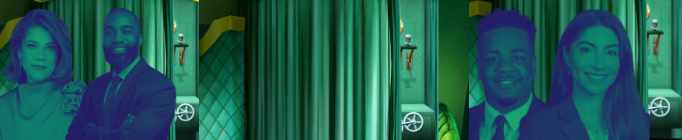
Boston City Councilor Julia Meija has questioned the voting practices of the city councillors every two years as they petition for the position of Boston City Council President. Boston City Councilor Brian Worrell has also questioned the current practices of the Boston City Councilors in this matter. Boston City Councilor Gabriela Coletta Zapata has allegedly secured enough votes to be President of the Boston City Council, and Boston City Councilor Henry Santana has also allegedly secured enough votes to be Vice President of the Boston City Council. Boston Globe article reference: https://www.boston.com/news/politics/2025/11/10/gabriela-coletta-zapata-says-she-has-secured-boston-city-council-presidency/
As Boston residents, I believe it’s time we peek behind the Wizard of Oz curtain and finally see how things are truly run. The public’s curiosity is not gossip — it’s a democratic instinct. A decision as consequential as choosing the City Council President shouldn’t happen in whispers and hallways. If councilors are elected by the people, then the people deserve to witness their first and most important vote of the session. The process should include a public council meeting, an open working session, and a transparent vote. Nothing less reflects the city we claim to be.
What’s different today is that Boston looks nothing like it did a little over 15 years ago. In 2009, the Council had only one woman and just two Black men serving as district councilors. (In 2010, Ayanna Pressley was the first Black woman to be elected to a Boston City Council At-Large seat.) Today in 2025, seven city councilors are women, six councilors of color serve the city, and three of the top at-large finishers are people of color. The electorate has changed. Expectations have changed. Our democratic practices should change, too.
Credit is due to Councilors Brian Worrell and Julia Mejia for pushing this discussion into the light. Tradition alone is not a justification for secrecy, especially when so many of those traditions were built in eras that excluded communities of color, women, and discouraged public participation. If we want a city government worthy of its residents, the Council Presidency must be chosen openly, with clear criteria, a public working session, and real debate. Transparency isn’t a favor to the public; it’s the minimum standard of a functioning democracy.
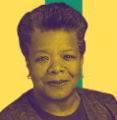
As Maya Angelou said, “Actions and words stick on walls and stay on people’s clothing.” Boston has the opportunity this year to shed old garments and dress its democracy in something new —something honest, inclusive, and accountable. Let’s start with the first vote of 2026 — call your Boston City Council members and ask them for transparency now!
Boston City Councilors' Phone numbers and Emails: https://www.boston.gov/departments/city-council/who-my-boston-city-councilor
========================================
George "Chip" Greenidge, Jr. is a visiting fellow at the Harvard Kennedy School's Ash Center for Democratic Governance and Innovation, and Executive Director and Founder of the Greatest MINDS, a nonprofit dedicated to creating a new generation of civic-minded leaders in Boston.
You can reach him at george.greenidge@gmail.com or IG georgegreenidgejr. or his website www.georgegreenidge.com.
==============================

Greatest MINDS is a Black-led organization that provides mentors from the community itself to college and high school students. Greatest MINDS aims to provide public discourse, citizenship, and educational and career opportunities to all of those interested in creating an inclusive economy and democratic society for all. www.gminds.org

For more information, please contact:
George "Chip" Greenidge, Jr.
Founder and Executive Director, Greatest MINDS Boston
Visiting Fellow, Harvard Kennedy School's Ash Center for Democratic Governance and Innovation
857.312.6340: cell phone
george.greenidge@gmail.com : email
www.georgegreenidge.com - website
www.gminds.org - website


Comments